Product Introduction
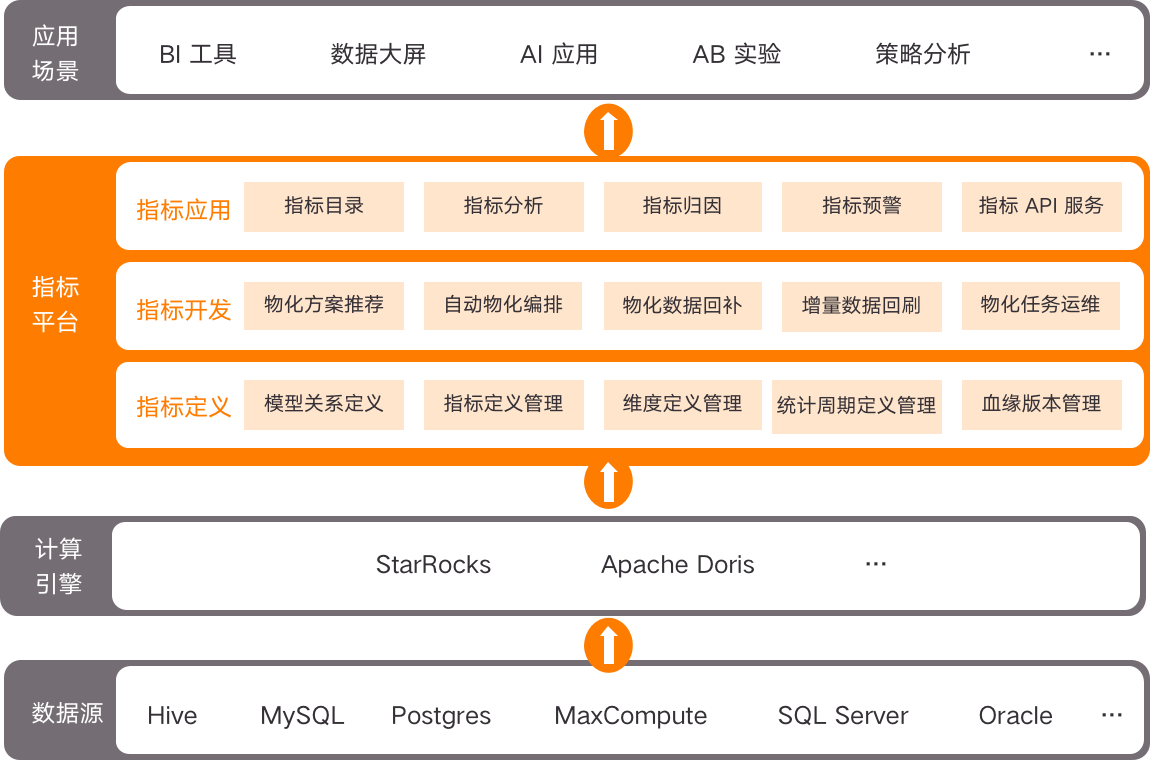
Aloudata CAN is a NoETL automated metric platform. It combines powerful metric definition capabilities with automated materialization and acceleration so IT teams do not need to repeatedly build large numbers of wide tables and summary tables. With Aloudata CAN, a metric can be governed, developed, consumed, and accumulated as a reusable asset from the moment it is defined.
The platform helps solve common metric-management problems such as inconsistent definitions, difficulty finding trusted metrics, and slow development cycles. It gives business users a real-time and flexible metric-centered analysis experience, including the ability to drill into metrics from different dimensions and continue all the way to detail-level data.
In a data warehouse architecture, Aloudata CAN acts as an independent layer between the data development platform and downstream applications. It decouples the physical data layer from the semantic layer and unifies metric management, development, and usage. With one semantic metric layer, teams can define a metric once and use it in many places. Data development teams can focus on building reusable common-layer assets, while the application layer is handled through NoETL automation.
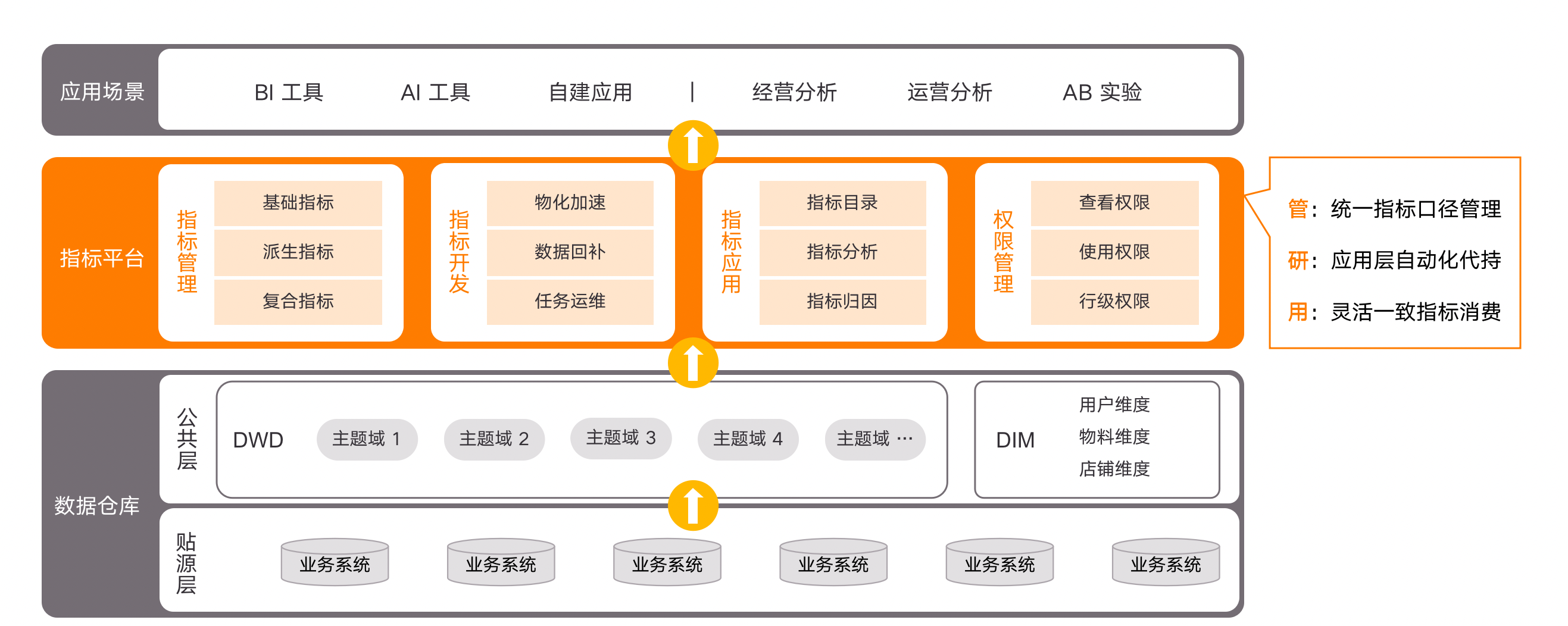
Aloudata CAN provides full-lifecycle metric management that combines standardized metric definition, automated metric production, a semantic metric catalog, and open metric services.
-
Define to govern: Metric elements are configured through semantic modeling. The system checks for duplicate or conflicting definitions, helping ensure consistent metric logic across the organization.
-
Define to develop: Based on the virtualization engine, the system takes over denormalized processing for wide tables and summary tables. Metrics can be materialized and accelerated automatically, shortening development cycles from weeks to minutes.
-
Define to accumulate: The platform builds an enterprise metric repository, supports field-level metric lineage and metric versions, and records how metric logic changes over time.
-
Define to consume: Metrics can be used directly in analysis applications and exposed through standardized APIs and JDBC interfaces. One metric can support dashboards, self-service analysis, intelligent attribution, metric monitoring, and other scenarios.